
Fall in New Orleans arrives slowly — a little less heat, a little more structure. Schedules tighten and the body is asked to shift gears again. This season we’re focusing on steadying your rhythm: warming tissue before you ask it to work, protecting your recovery and giving your nervous system room to settle before the holidays. As always, we’re looking at the whole picture: how you move, breathe and rest.
Why does pain often increase in the fall?
Fall asks a lot of the body at once. Weather, schedules and daylight all shift within a few short weeks, and your system has to adjust to each one. Cool fronts can leave tissue stiffer first thing in the morning, just as routines get busier: school drop-offs, longer workdays, more time sitting.
Pain this season is rarely a sign that something is broken. More often, it’s your body pointing to a mismatch between what you’re asking of it and the recovery you’re giving back.
A few common fall flare triggers:

Weather swings + morning stiffness — Cool mornings and shifting fronts often mean you wake up guarded. Cold, still tissue moves less freely, so the first movements of the day feel hardest. Warmth, breath and slow movement are what it’s asking for.
Busier schedules + more sitting — Back-to-school season and the end-of-year push may mean longer stretches in a chair or sitting in a carpool line. Fascia and joints thrive on variety, so rather than chasing perfect posture, change position more often.

Shorter days, shorter recovery — Less daylight means less time for walking, training or simply being outside, and sleep often shifts too. When recovery shrinks but the demands don’t, symptoms speak up.
What’s new at Hands on Health
A brand-new website — lovingly designed and built in-house by our own Office Manager, Chris Weber. Book a visit, check out our latest events and catch up on the Wellness Beet at handsonhealthnola.org.
Ring Splint Consultations — with Chris Weber, our EDS Ring Splint Consultant, who lives with EDS himself. A 30-minute consult ($40) for hypermobile and EDS hands, to see whether splints can steady your finger joints. Book a visit.
5-Minute Warm-Up for Cool Mornings
Think of this as a conversation with a cold, still body: letting it know it’s safe to move.
Try moving slowly, breathing fully and noticing what your body is telling you…
Sit on the edge of the bed, one hand on your ribs and one on your belly. Take five slow breaths, letting each exhale run longer than the inhale: a soft start for your nervous system instead of a jolt.
Still seated, slowly round and unfold your spine, one segment at a time, like a wave. Keep it small; cold tissue loosens best with easy repetition.
Draw slow circles with your shoulders, then let your head follow a gentle arc side to side, staying well within what feels comfortable.
Stand with your hands on a counter and hinge your hips back and forward, ten slow reps, to wake the fascia and muscles along the back of the body.
Shift your weight side to side, then take twenty slow steps around the room. Notice how much easier that feels than your first step out of bed.
A stiff fall morning is your body giving you information. Offer it warmth and a few minutes of unhurried movement, and most of it will quietly settle. If it doesn’t, that’s worth a conversation with us.
Try this: hum for a minute
Dr. Kelly works this into patient sessions, and you can do it anywhere.
Why it helps: humming through your nose supports easier, calmer breathing, and a long, slow exhale helps your nervous system step down from high alert.
Hungry for more? Check out our Autumn Grounding Bowl recipe!
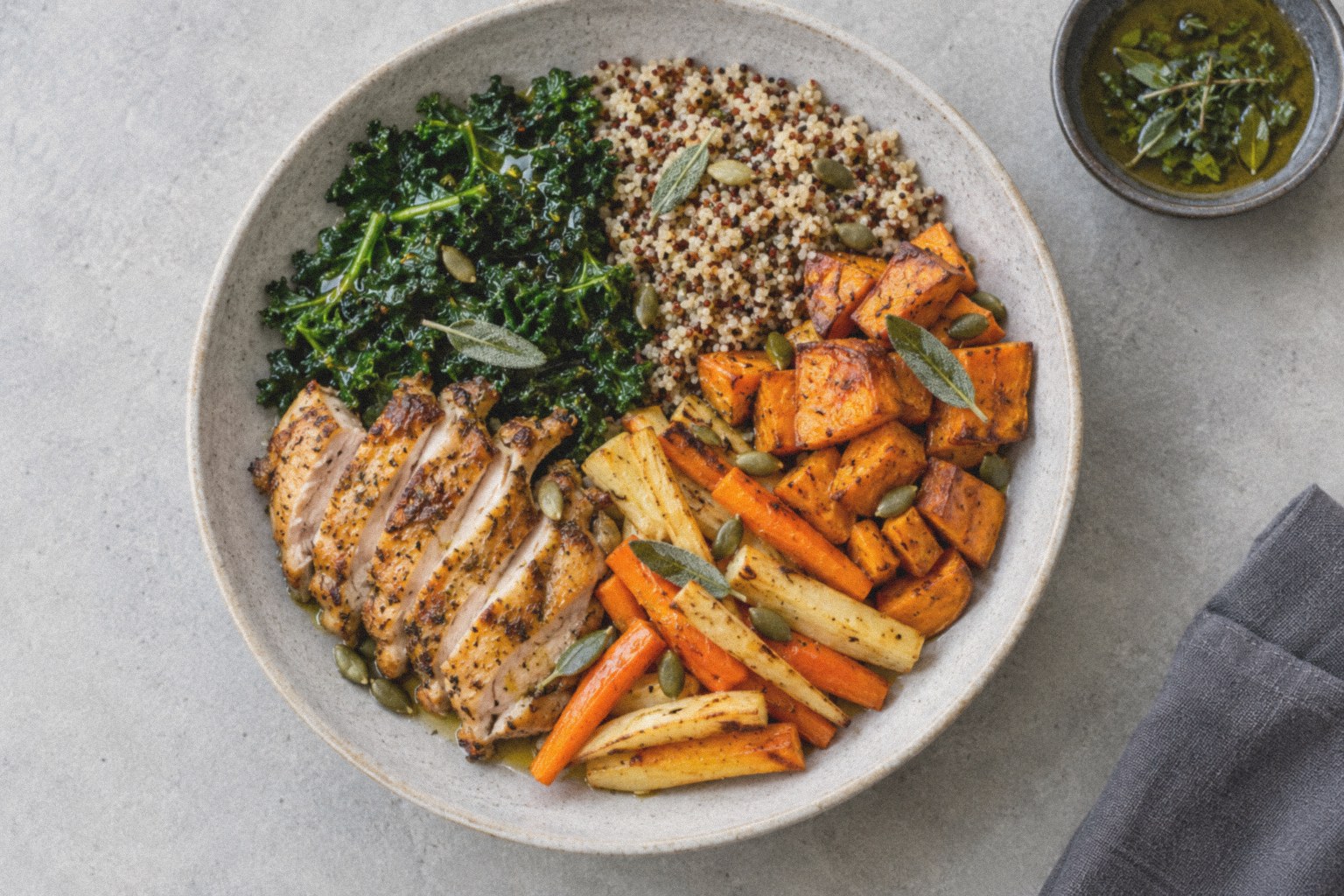
A warm, simple bowl for steady blood sugar, easier digestion and energy that lasts past 3 PM. Why we love it clinically: like every Beet recipe, it’s written with sensitive systems in mind, built around cooked, warm foods that many people tolerate better as the weather cools.
Autumn Grounding Bowl ingredients:
- Base — roasted sweet potato or butternut squash; a modest scoop of quinoa or white rice if tolerated
- Protein — roasted chicken thigh, turkey or well-cooked lentils
- Greens — gently sautéed kale or chard (cooked, not raw)
- Warm crunch — roasted carrots, parsnips or fennel
- Fats — extra virgin olive oil; optional pumpkin seeds if tolerated
- Warming herbs — sage, thyme, rosemary or parsley
Warm herb drizzle: whisk 2–3 tbsp extra virgin olive oil with 1 tbsp warm water, chopped sage or thyme and a pinch of sea salt. Optional, if tolerated: a small spoon of tahini for body, or grated ginger for warmth.
Why these ingredients work: roasted roots give slow, steady energy rather than a spike and crash, and cooked greens are easier on a sensitive gut than raw ones. Olive oil and pumpkin seeds help keep you full. And a warm meal, eaten slowly, lets your body settle into rest-and-digest.
From the Dental Chair to the Whole Body
Dr. Kelly wrote a three-part series for the New Orleans Dental Association’s NODA News exploring where the dental chair meets the rest of the body:
- The Bent Clinician — How dental work is reshaping your spine, and what to do about it. Read in NODA News
- The Anxious Patient — How breathing, presence and calming cues transform what happens in the dental chair. Read in NODA News
- The Whole Patient — What fascia reveals about pain, and the case for treating together. Coming soon in NODA News
For a full digital copy of any article, email admin@handsonhealthnola.com.
Friends of the clinic
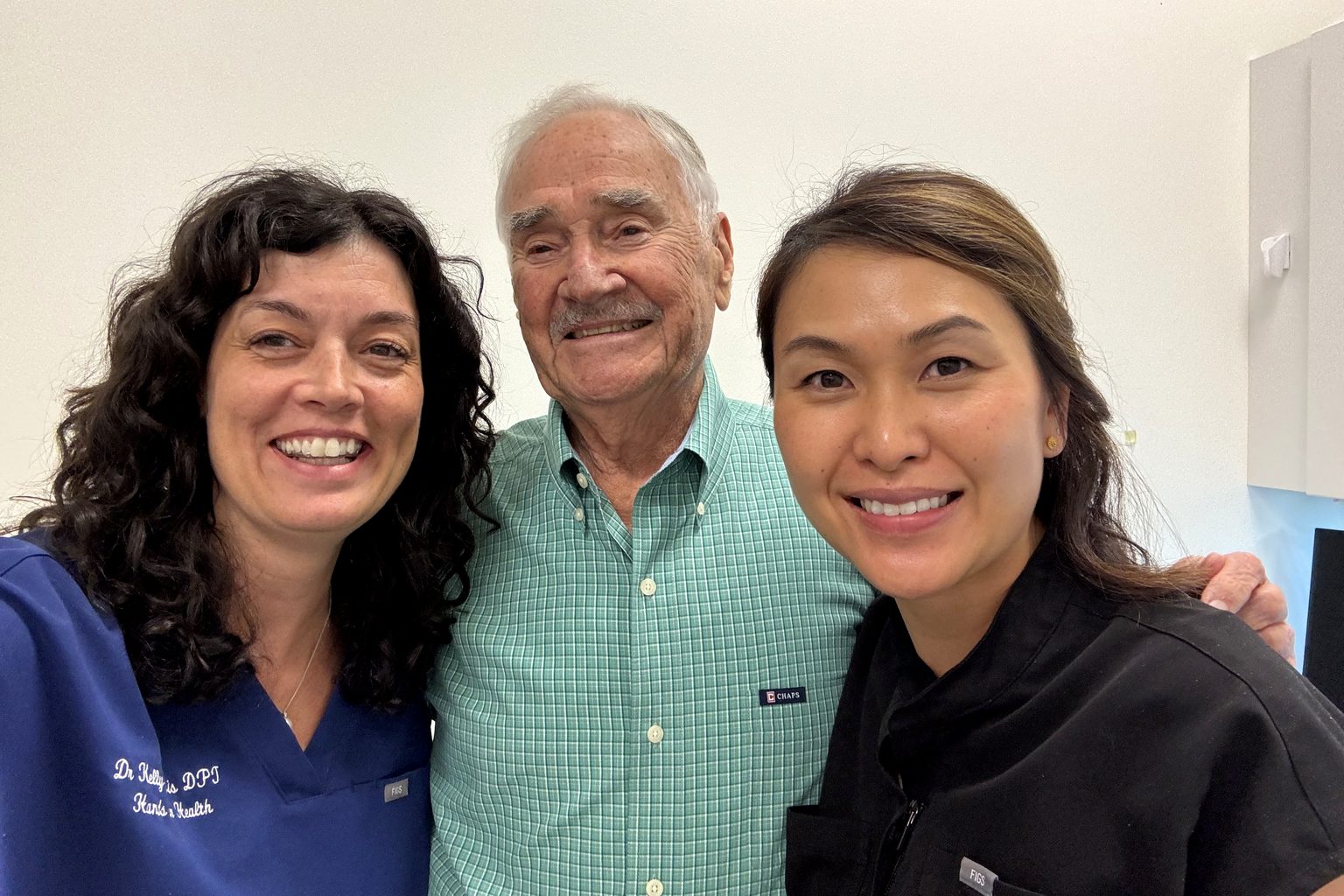
Jaw pain rarely travels alone; it often brings neck and shoulder tension with it, so we take a team approach. For TMJ disorders, we’re proud to work alongside Dr. Alice Ho, DDS, of Exceptional Dental, whose care pairs beautifully with our dry needling and manual therapy. And a warm thank-you to Dr. Noel Pilie, DDS, a retired New Orleans dentist and a good friend of the clinic.
Out and about
Musician’s Pop-up Clinic at The Broadside — Date TBD. Free, no appointment needed. Ergonomic checks, injury-prevention guidance, manual therapy, dry needling and Reiki for the musicians who give this city its sound. Bring your instrument. Meg will offer complimentary ear seeds (needle-free acupressure).
EDS Support Group — our monthly virtual gathering for the Ehlers-Danlos and hypermobility community, hosted by Marin Casselli, LCSW, and Chris Weber. Last Wednesday of each month, 6:00–7:30 PM on Google Meet; free, donation-based. Find the next date on our events page.
Drop the Beet: What Your Fascia Wants This Fall
Stiffness on a cool morning usually means one simple thing: your fascia hasn’t warmed up yet. Fascia responds to temperature, hydration and movement, and when it’s cold, still and dry, it lets you know in the first hour of the day.
If you’re noticing more morning stiffness, tension headaches, jaw clenching or a sense that your body is behind the pace of your schedule, this is the season to get ahead of it, before the holidays arrive.
We’re now booking fall sessions: unhurried, one-on-one visits with fascia-informed manual therapy, dry needling, craniosacral therapy and breathwork, guided by a plan our team builds around your history, not a diagnosis code.
Elevate your healing this fall, and meet the busiest season of the year feeling stronger, steadier and more at home in your body.
Schedule a Visit ← Back to the Beet